A standard single-story home addition in Spokane runs about $150 to $350 per square foot, and a second-story addition about $200 to $400 per square foot because of the structural work and stairs it requires. That means a small 200 square foot bump-out often lands around $30,000 to $70,000, a 400 square foot room around $50,000 to $140,000, and a full 1,000 square foot addition roughly $150,000 to $350,000. Where you fall depends on finishes, site conditions, and how the new space ties into the existing house.
Per square foot is the most useful way to sanity-check an addition budget, because an addition is priced less like a remodel and more like a small new build attached to your house. The number swings widely because you are paying for the new space and for how it connects to the existing structure, roof, and utilities. Here is what that looks like in Spokane by size, and what the per-foot figure does and does not include.
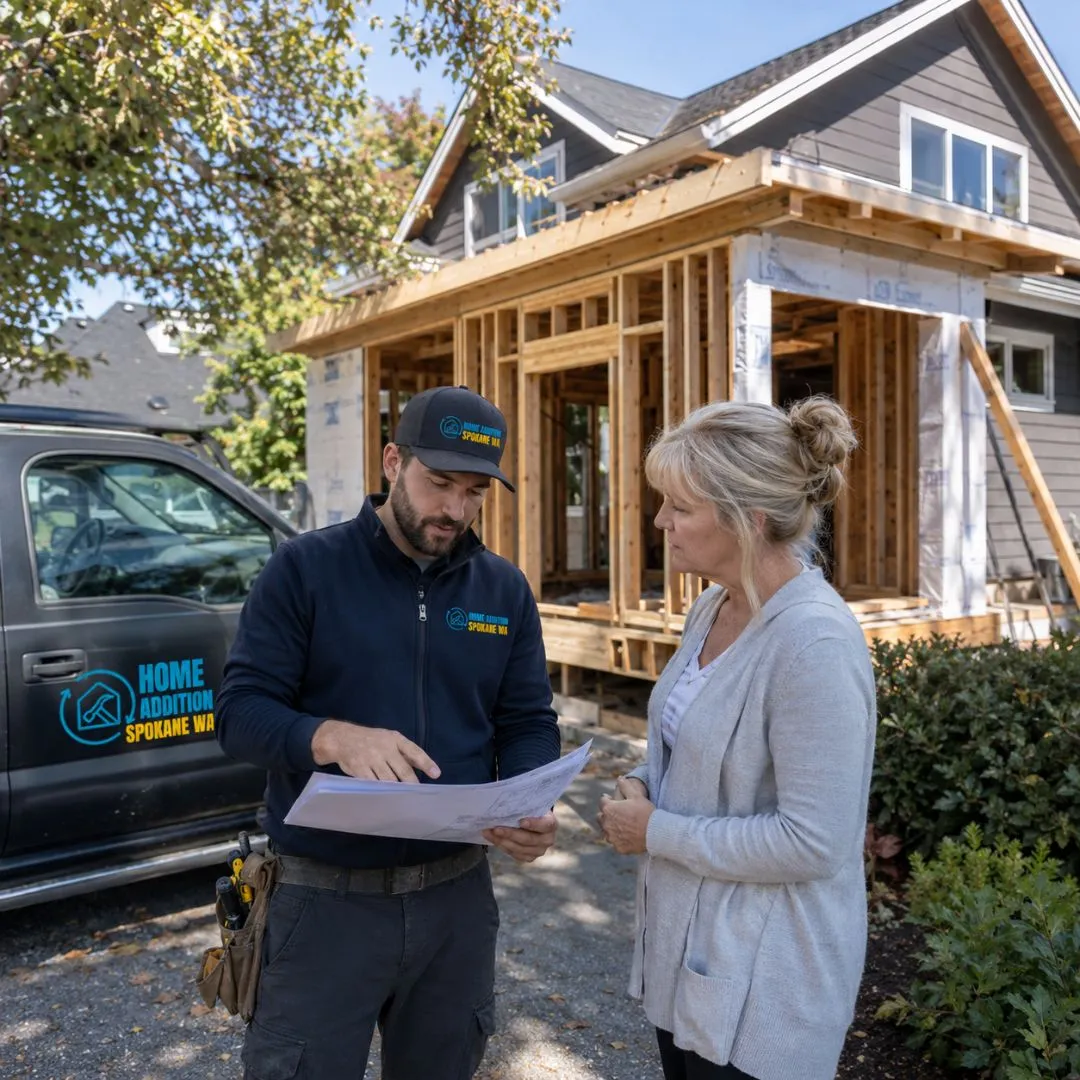
Home addition cost by size in Spokane
The bigger the addition, the larger the total, but the per-square-foot rate often improves slightly with size because fixed costs like design and permits spread across more space. The ranges below are planning ranges for the Spokane area, not quotes.
| Addition size | Typical Spokane cost | What it fits |
|---|---|---|
| 200 sq ft | $30,000 – $70,000 | A bump-out, small bedroom, or home office |
| 400 sq ft (20x20) | $50,000 – $140,000 | A large primary suite or great room |
| 500 sq ft | $75,000 – $175,000 | A primary suite with a bathroom, or two rooms |
| 1,000 sq ft | $150,000 – $350,000 | A major multi-room addition or full second story |
A bathroom or kitchen inside the addition raises the per-foot cost because of plumbing, while a simple bonus room keeps it lower. That gap is biggest on a master suite addition, where the en-suite bath can add 40 to 70 percent to the same square footage. For how these sizes break down by addition type, from a garage conversion to a full second story, see our Spokane home addition cost guide.
What is the cost per square foot in Spokane?
Plan on roughly $150 to $350 per square foot for a standard single-story ground-floor addition in Spokane, and $200 to $400 or more for a second story. Simpler, unconditioned or bonus-room space sits lower; kitchens, bathrooms, and high-end finishes sit higher.
One thing that surprises people is that a single-story addition is not automatically the cheapest per foot. A ground-floor addition requires all the site work, footing, and foundation, plus a roof, so its per-foot cost can climb toward the top of the range. Spokane sits at the lower-cost end of Washington thanks to cheaper labor and flatter sites, so local projects tend to land toward the lower part of these ranges rather than the top. Whether an addition is worth that investment is a separate question we cover in our guide on whether a home addition is worth it in Spokane.
How much does it cost to add 1,000 sq ft to a home?
Adding 1,000 square feet in Spokane typically costs about $150,000 to $350,000, depending on whether you build out or up and the finish level. A single-story ground-floor addition lands in that range, while a full 1,000 square foot second story can run higher once structural work and stairs are included.
A thousand square feet is a major addition, roughly the size of a small home, so it is priced accordingly. Nationally a 1,000 square foot addition commonly runs $100,000 to $300,000, and more on smaller or complex homes, with Spokane generally toward the lower half given local costs. At this size, the fixed costs of design and permitting are a smaller share of the total, but the structural, mechanical, and finish work all scale up, so a detailed plan and a firm scope matter more than ever.
Is it cheaper to build out or build up?
It depends on your lot. Building out avoids the structural reinforcement, stairs, and roof removal a second story requires, but needs a new foundation and roof and uses yard space. Building up reuses the existing footprint but adds engineering and a staircase.
Because the foundation and roof already exist, framing up a second story can be efficient, though structural reinforcement, stairs, and temporary weather protection add cost. On the flat lots common around Spokane, building out is often the simpler and more affordable route when there is room to spare. And the cheapest square footage of all comes from reusing space you already have: a garage conversion skips the new foundation and roof entirely, and a finished basement is often the lowest-cost way to add livable space. A sunroom is another lighter-footprint option when you mainly want bright living space.
What the per-square-foot number leaves out
A per-square-foot figure almost always covers hard construction only: foundation, framing, roof, envelope, mechanical rough-in, drywall, and basic finishes. Design, engineering, permits, utility upgrades, finish upgrades, and contingency usually sit outside that headline number.
This is the single biggest reason quotes seem to disagree. When you compare a bid to a published per-foot range, the first question is which of those extra line items the range already assumes you are paying for. Design and structural engineering, permit and inspection fees, upgrades to your electrical panel or HVAC to serve the new space, and a 15% to 20% contingency for the surprises older Spokane homes reveal all add to the true total. Building those into your budget from the start is what keeps a project from blowing past its per-foot estimate. Our home addition timeline guide shows how those phases fit together.
How to get more space per dollar in Spokane
Convert existing space before building new, keep a simple rectangular footprint, build out on a flat lot rather than up, and choose midrange finishes. Each move lowers your effective cost per square foot.
The most cost-effective square footage is space you already own: converting a garage or finishing a basement reuses the shell and skips the most expensive work. When you do build new, a simple shape is cheaper to frame and roof than a complex one, and staying on one level avoids the structural premium of building up. Keep finishes midrange rather than luxury, match the scope to your neighborhood so you do not over-improve, and you will stretch every dollar further. When you are ready to price your specific project, our home additions and room additions overviews are a good start, or get an estimate.

By Home Addition Spokane WA
Home Addition Spokane WA helps homeowners across Spokane and the surrounding areas plan room additions, primary-suite additions, garage conversions, sunrooms, second-story additions, and whole-home projects, and connects them with vetted local builders. These per-square-foot figures reflect current Spokane-area pricing for planning purposes; your real cost depends on size, finishes, site, and how the addition ties into your home, so treat the ranges as a starting point rather than a quote.